Sayyid Al-Hakeem: Good Ending Fruit Prayer Righteous Empowerment Achieves Reform Quartet
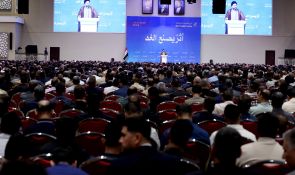
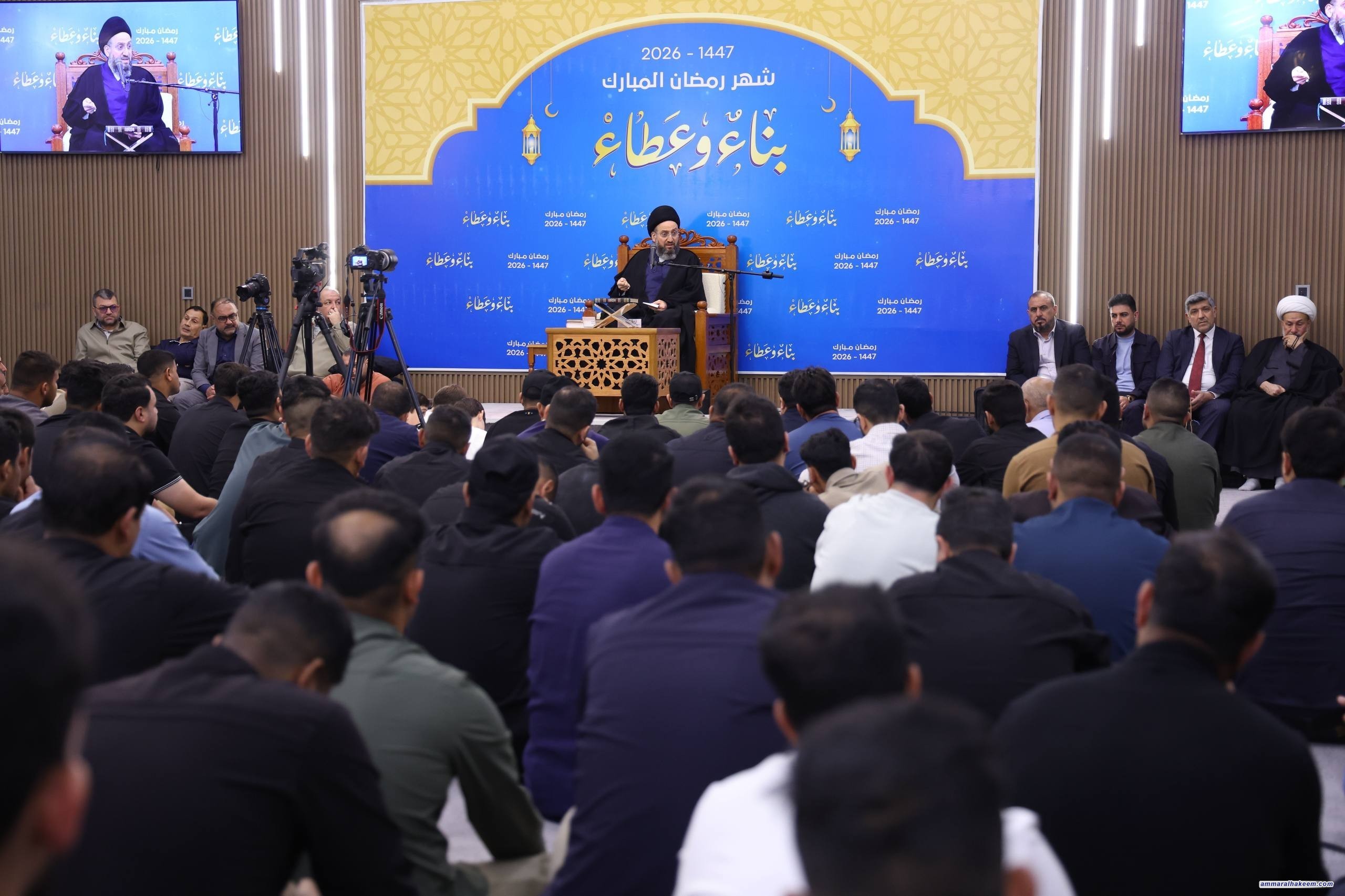
His Eminence Sayyid Al-Hakeem, Head of the National State Powers’ Alliance, explained during today’s Ramadan lecture that a good ending is among the fruits of prayer, representing the seventeenth effect discussed within H.E.’s ongoing explanation of the Epistle on Rights by Imam Zain Al-Abidin Ali Ibn Al-Hussein Al-Sajjad (peace be upon him).
The following verses from Holy Quran point to this meaning:
“Indeed, Allah will surely support those who support His cause. Indeed, Allah is All-Powerful, Almighty. Those who, if We grant them authority in the land, establish prayer, give zakah, enjoin what is right, and forbid what is wrong. And to Allah belongs the outcome of all matters.” (41–40:22 Holy Quran)
H.E. highlighted several key themes reflected in these noble verses:
Victory and triumph over adversaries come through divine support and adherence to the religion of Allah and its obligations: “Indeed, Allah will surely support those who support His cause.”
Enjoining what is right and forbidding what is wrong, and implementing the teachings of the true religion, require authority, empowerment, and the rule of law: “Those who, if We grant them authority in the land.”
When authority rests with the righteous, it is invested in spreading guidance, reinforcing noble values, and serving people: “Establish prayer, give zakah, enjoin what is right, and forbid what is wrong.” (104:1 Holy Quran) The opposite occurs when authority falls into the hands of the unrighteous, as reflected in another verse: “And when he assumes authority, he strives throughout the land to spread corruption in it and destroy crops and livestock. And Allah does not like corruption.” (205:02 Holy Quran)
Among the principal outcomes of holding authority is achieving a fourfold reform agenda: establishing prayer; attending to people’s livelihoods and social welfare through zakah; reinforcing moral and spiritual values in society by promoting what is right; and preventing corruption, as well as intellectual, behavioral, and social deviations by forbidding what is wrong.
A person should never rely solely on H.E.’s deeds but must remain mindful and constantly supplicate to Allah to grant a good ending: “And to Allah belongs the outcome of all matters.”
H.E. also cited several Qur’anic verses and narrations from Prophet Mohammed (peace and blessings be upon him and his family) and the Ahl Al-Bayt (peace be upon them) that point to a good ending as one of the fruits of prayer. Among them:
“And those who are patient, seeking the pleasure of their Lord, establish prayer, spend from what We have provided for them secretly and openly, and repel evil with good—those will have the good end of the Home.”
(22:13 Holy Quran)
“And enjoin prayer upon your family and be steadfast in maintaining it. We do not ask you for provision; We provide for you. And the good end belongs to the righteous.”
(132:20 Holy Quran)
The Prophet Mohammed (peace and blessings be upon him and his family) said:
“The believer continues to fear a bad ending and does not become certain of attaining Allah’s pleasure until the moment his soul is taken and the Angel of Death appears to him.”
Imam Ali (peace be upon him) said:
“True happiness is that a person’s deeds conclude with happiness, while true misery is that a person’s deeds conclude with misery.”
He also said:
“If you wish Allah to protect you from a bad ending, then know that whatever good you do is by Allah’s grace and guidance, and whatever wrongdoing occurs is due to Allah’s forbearance, patience, and pardon toward you.”
Imam Musa Al-Kadhim (peace be upon him) said:
“The conclusion of your deeds should be fulfilling the needs of your brothers and showing kindness to them as much as you are able; otherwise your deeds will not be accepted. Show tenderness and mercy toward your brothers so that you may join us.”
H.E. also referred to an important narration illustrating the significance of positions of responsibility and their impact when held by the righteous. In the book Rights of the Believers by Abu Ali Ibn Tahir, it is narrated that Ali Ibn Yaqtin once sought permission from Imam Musa Al-Kadhim (peace be upon him) to resign from serving under the ruling authority, but the Imam did not permit him and said:
“Do not do so, for through you we find comfort and your brothers gain honor. Perhaps Allah may mend what is broken through you and repel the harm of opponents from His allies through you. O Ali, the expiation of your deeds is kindness to your brothers. Guarantee me one thing and I will guarantee you three: guarantee that whenever you meet one of our followers you will fulfill his need and honor him, and I guarantee that you will never be overshadowed by the roof of a prison, never be struck by the edge of a sword, and poverty will never enter your home. O Ali, whoever brings joy to a believer has first pleased Allah, then the Prophet, and then us.”