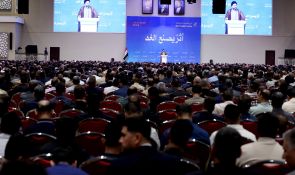
Sayyid Al-Hakeem: Establishing Prayer, Giving Zakat to Goodness, Victory, Strong Society Path
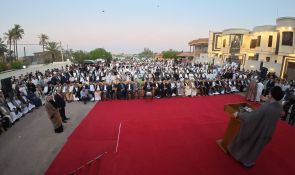
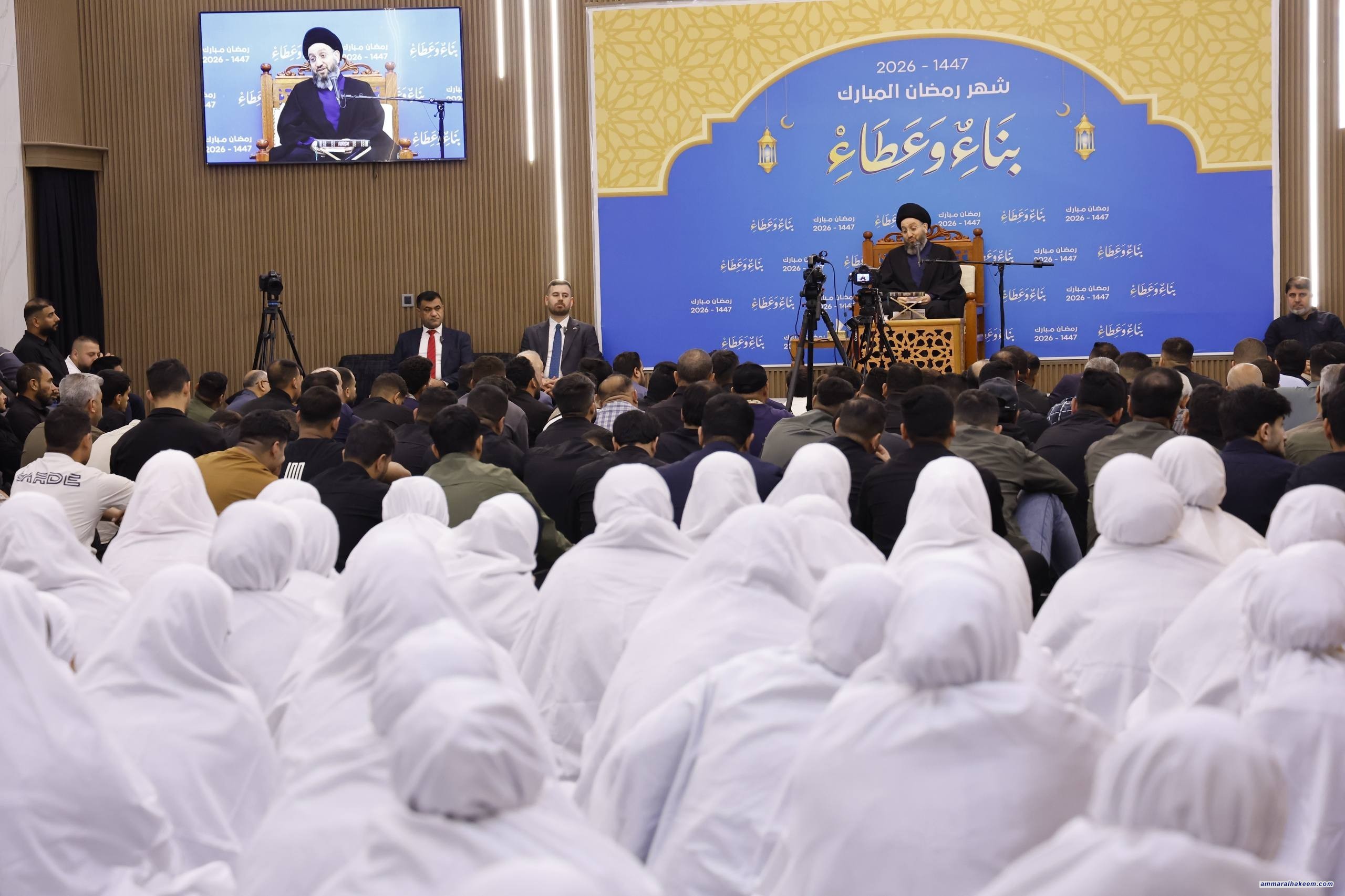
His Eminence Sayyid Al-Hakeem, Head of the National State Powers’ Alliance, continued H.E.’s discussion of the Epistle on Rights by Imam Zain Al-Abidin Ali Ibn Al-Hussein (peace be upon him) during today’s Ramadan lecture, focusing on the tenth right—the right of prayer. H.E. has previously explained fifteen of the effects of prayer mentioned in the Holy Quran.
The Sixteenth Effect: Goodness
H.E. referred to the following verse:
“Establish prayer and give zakat. Whatever good you send forth for yourselves, you will find it with Allah.” (110:02 Holy Quran)
H.E. explained that prayer and zakat are among the most important sources of strength and empowerment because they reinforce the bond between the servant and Allah. H.E. noted that the good deeds a person offers may manifest during life, through a will, or even after death through ongoing charity and righteous children.
H.E. also pointed out that forgiveness and forbearance are qualities attainable by those who uphold prayer, as reflected in the verse:
“Pardon and overlook until Allah delivers His command. Surely Allah is Most Capable of everything. Establish prayer and give zakat…”
(109:02 Holy Quran)
H.E. emphasized that the path to victory and major achievements—according to the Qur’anic guidance—lies in establishing prayer and giving zakat, as these acts strengthen the relationship with Allah. This path grants the believer the strength to confront both the internal enemy represented by the whispers of Satan and external adversaries.
H.E. also highlighted the significant impact of congregational prayer, where people gather together, strengthening social bonds and reinforcing cohesion within society. Beyond its spiritual dimension, this collective worship contributes to a stronger and more unified community, which is why it is strongly encouraged in prophetic traditions.
H.E. further explained that zakat and charitable giving help bridge social and economic gaps within society, thereby reinforcing cohesion and stability while also carrying profound rewards in the Hereafter:
“Whatever good you send forth for yourselves, you will find it with Allah.”
(110:02 Holy Quran)
H.E. outlined several benefits of righteous deeds:
Good deeds primarily benefit the one who performs them, leaving deep positive effects on the human soul.
Righteous deeds are preserved and
“What you have will perish, but what Allah has is everlasting.”
(96:16 Holy Quran)
On the Day of Judgment, good deeds will appear to the believer in a distinct and rewarding form, as indicated in the verse:
“The example of the Paradise promised to the righteous is that in it are rivers of unaltered water, rivers of milk whose taste never changes, rivers of wine delightful to those who drink, and rivers of purified honey. They will have in it every kind of fruit and forgiveness from their Lord.”
(15:47 Holy Quran)
Conversely, evil deeds will also be shown to people, becoming a source of regret and sorrow, as indicated in the verse:
“Thus Allah will show them their deeds as regrets upon them.”
(167:02 Holy Quran)
Another verse also reflects this reality:
“On that Day every soul will find present whatever good it has done and whatever evil it has committed, and it will wish that there were a great distance between it and that evil.”
(30:03 Holy Quran)
H.E. also cited several narrations illustrating this effect of prayer. Among them:
Prophet Mohammed (peace and blessings be upon him and his family) said:
“Seek goodness throughout your lifetime and strive to escape the Fire, for the seeker of Paradise does not sleep, and the one fleeing from the Fire does not sleep.”
He also said:
“Whoever is deprived of gentleness is deprived of all goodness.”
Imam Ali (peace be upon him) said:
“Doing good is an enduring treasure and a fruitful harvest.”
He also said:
“Commit yourselves to acts of goodness—hasten toward them, and do not allow others to be more deserving of them than you.”