Sayyid Al-Hakeem: Restore Iraqi Sovereignty, End International Coalition Missions Signal Recovery, International Recognition
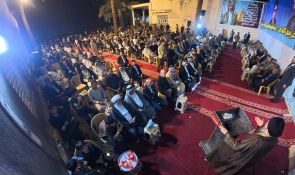
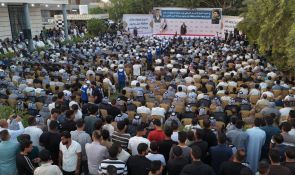
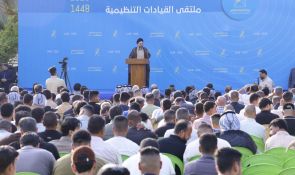
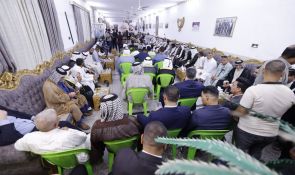
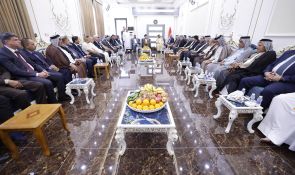
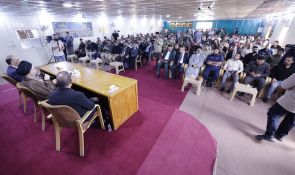
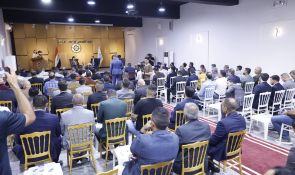
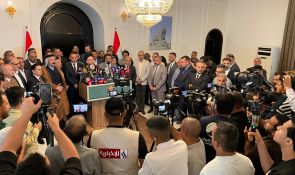
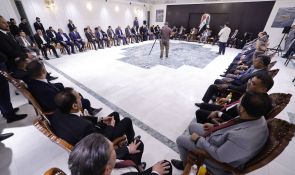
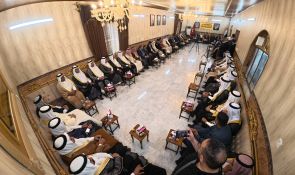
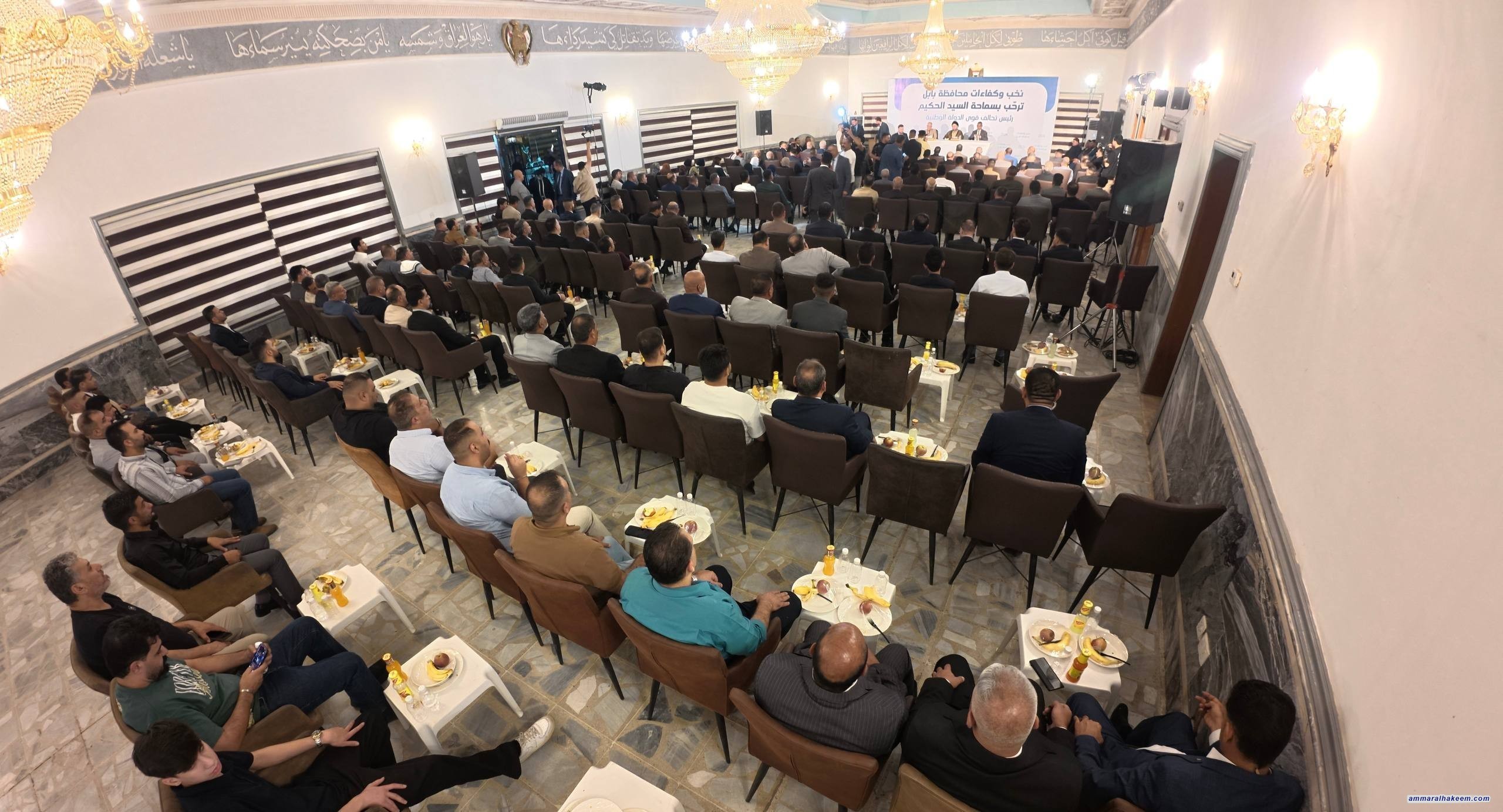
During the final stop of the visit to Babil Governorate, His Eminence Sayyid Al-Hakeem, Head of the National State Powers' Alliance, met a group of dignitaries and professionals from the governorate, stressing the importance of engaging with the dignitaries to learn about conditions in the governorates firsthand, away from electoral calculations, and explaining that these meetings strengthen communication among the components of the Iraqi people. H.E. congratulated them on the birth of Imam Al-Hassan Al-Askari (PBUH), pointing to the imminent restoration of Iraqi sovereignty and the end of the International Coalition's missions, and regarding this as a message of recovery for Iraq's situation and international recognition of it. H.E. noted that Iraq has overcome security, political, and social challenges, with a shared language and rules for political work, and with recourse to constitutional and legal frameworks when disagreements arise, adding that disagreements are natural in a country like Iraq.
H.E. considered the current problem to be primarily economic, hence the choice of a prime minister with an economic background, and outlined the current government's priorities: increasing oil production, in line with Iraq's situation and population growth, and bringing in foreign investment and entering into economic partnerships with foreign companies, calling for an understanding of this reality.
H.E. pointed to the government's direction to diversify oil export outlets through a pipeline network toward the Red Sea and the Mediterranean, urging the dignitaries to support ideas that help increase production and diversify export outlets. H.E. noted that foreign investment gives countries around the world interests in Iraq and, consequently, leads them to support Iraq and its political path, affirming that Iraq needs these steps because it relies heavily on oil in its federal budget, and expressing concern that the regional crisis may end, causing the idea of diversifying export outlets to lose momentum.
H.E. stressed diversifying the economy and freeing it from dependence on a single source of income by supporting agriculture, industry, tourism, investment, and modern technology, explaining that Babil has great potential and can contribute to diversifying the economy and moving Iraq from a state of consumption to a state of production. H.E. recalled that at the start of the founding of the Iraqi state, oil revenues went to strategic projects and future generations, and called for lowering expectations amid the financial crisis, while deeming it likely that the regional crisis will be resolved soon because of the pressure it has placed on the global economy.
H.E. renewed support for resolving the issue of weapons outside the framework of the state, explaining that resolving it is an Iraqi demand, a constitutional reality, and a national interest. H.E. clarified that 30 September marks the starting line for handing over weapons, followed by nine months to complete the task of resolving the weapons issue across the country and under all labels, and commended the role of the factions in confronting ISIS, reclaiming and liberating the land, and handing over weapons to the Popular Mobilization Forces (PMF) as an official security institution.
H.E. pointed to the initiative of one million residential land plots, stressing the need to hand over serviced land suitable for housing in order to resolve the crisis through real estate developers, affordable domestic and foreign mortgage loans, and the necessary expertise in this field, backed by sovereign guarantees provided by the state. H.E. affirmed the need to diversify economic models to resolve the crisis and meet the needs of the people in all their categories and economic capacities, and called for supporting the project with the necessary legal legislation.
H.E. called on Babil Governorate to attract investments to provide job opportunities and economic projects that deliver sustainable development, pointing to the importance of replicating the Muthanna Governorate experience in all governorates. H.E. explained that Babil possesses immense tourism potential, most notably the ancient city of Babylon and its deep-rooted civilization, in addition to religious tourism, making this conditional on supporting the private sector and enabling it to provide the necessary solutions to the economic reality, and calling for a shift in economic thinking toward effective solutions, support for investors, and the provision of the necessary legal environment.
H.E. affirmed the government's direction to concentrate efforts on specific governorates and defined priorities in order to create a success story that can be replicated in more than one place, stressing that the current focus is on supporting Muthanna and Salahuddin governorates, and explaining that industrial projects are about to enter service.
H.E. called for adherence to administrative decentralization to guarantee the rights of the governorates, as they are best placed to know the details of their own affairs, stressing that local governments should be granted their constitutional powers, while emphasizing the importance of protecting these powers from exploitation and private interests, given the role this plays in preserving the governorates' stability. H.E. also called for amending the Governorates Law so that the governor is elected by an absolute majority (half plus one) and dismissed by a two-thirds majority, affirming that this amendment gives the governorates stability and, consequently, continuity of work and the delivery of achievements.