/23/3/photo_2025-12-24_09-34-33.jpg)
Sayyid Al-Hakeem: Shaheed Al-Mihrab, Nation Project, State Vision, Moderation Compass to Guide Political Action
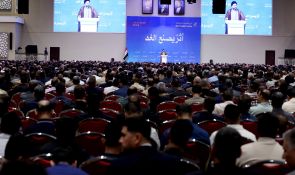
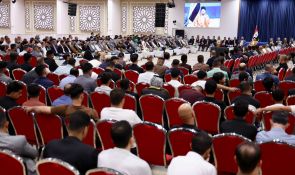
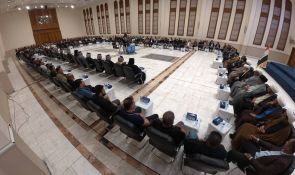
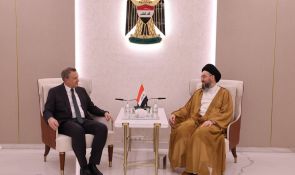
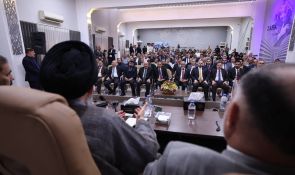
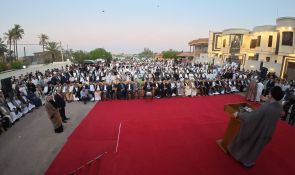
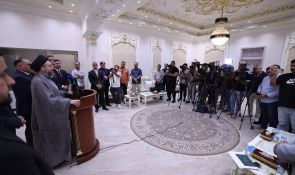
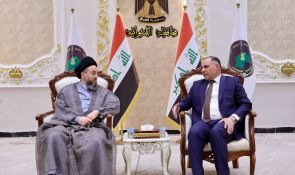
At a seminar organized by Al-Binaa Center for Research and Studies titled “Shaheed Al-Mihrab: A Nation Project and a State Vision,” His Eminence Sayyid Al-Hakeem, Head of the National State Powers’ Alliance, congratulated attendees on the advent of the blessed month of Rajab and the auspicious births of Imam Mohammed Al-Baqir and Imam Ali Al-Hadi (peace be upon them). His Eminence also expressed condolences on the anniversary of the martyrdom of Imam Ali Al-Hadi, Shaheed Al-Mihrab (may Allah sanctify his soul), and the Leaders of Victory (may Allah be pleased with them).
H.E. stated that Shaheed Al-Mihrab (Martyr of the Altar) represented an exceptional figure formed amid complex and challenging circumstances, whether in confronting the dictatorial regime or in delivering mobilizing messages inside Iraq. Through coordination and integration with political powers at the level of one component and across other components, a genuine alternative to dictatorship was crystallized. H.E. affirmed that the Shaabaniyah Uprising, the political movement of opposition forces, and the positions of the Iraqi people transformed Saddam’s regime into a spent card before the international community.
H.E. explained that Shaheed Al-Mihrab was distinguished by a pastoral spirit, broad-mindedness, patience, inclusiveness, and the consistent presence of spiritual and ethical dimensions in his positions and movement. These traits refined his character, fostering optimism and the ability to see opportunities within challenges.
H.E. noted that the largest component reflects a sect marked by diversity in outlooks and orientations, yet a shared awareness and understanding gradually emerged among the forces of the Coordination Framework. This was reflected in successive statements and official positions, indicating that moderation has become the compass of political action, safeguarding the public interest through steadfast principles and pragmatic flexibility.
H.E. pointed out that the high turnout in the recent elections reaffirmed society’s commitment to the political project and demonstrated the elections’ transparency through the announcement of results without objections or complaints. H.E. added that shortening constitutional timelines is evidence of political recovery and progress, citing the swift selection of the largest parliamentary bloc.
H.E. clarified that the mechanism for selecting the Prime Minister is neither imposed nor rejected arbitrarily, but rather based on a clear vision, methodology, and defined criteria, including identifying five key priorities and their solutions, and forming a team capable of delivering them, while emphasizing the unity of the Coordination Framework within an integrated system.
H.E. affirmed that discussions on weapons are grounded in the principle that arms belong to the state, commending the role of the factions in confronting terrorism and protecting the political system. H.E. explained that while consensus exists on the principle, dialogue continues regarding timing and circumstances, in a gradual process aligned with the state and its institutions. H.E. stressed the importance of cohesion in supporting the government and exercising political will as the most effective path to success in the coming phase.