Sayyid Al-Hakeem: Diversified Economic Models, Crisis FInal Resolution
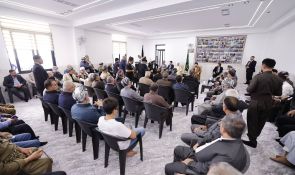
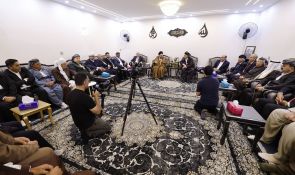
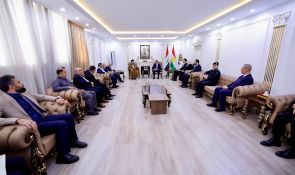
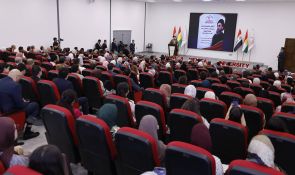
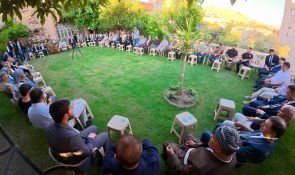
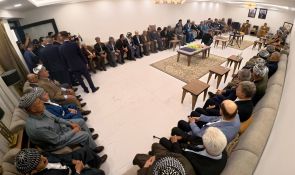
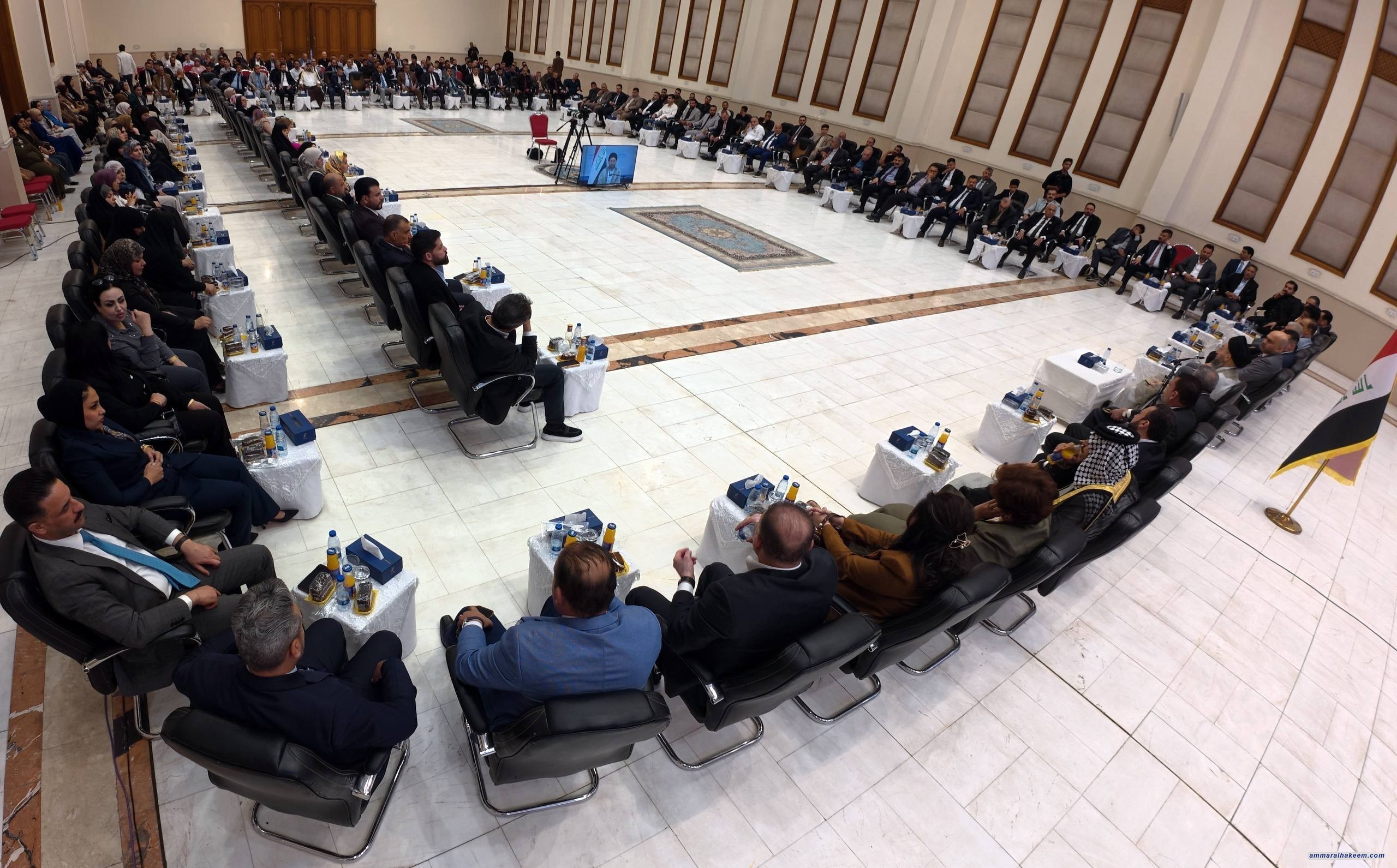
At the Baghdad Diwan of Professional and Syndicate Elites, and after listening to the remarks of those present, His Eminence Sayyid Al-Hakeem, Head of the National State Powers' Alliance, affirmed the importance of syndicates in the country's development path, pointing to their role in informing the public of the country's reality and the challenges it faces, noting that the region is experiencing a state of war that is reflected onto Iraq, and observing that Iraq's circumstances have prevented it from finding solutions to these exceptional conditions, and that Iraq has therefore suffered greatly from the events of the region.
H.E. explained the nature of the economic challenge, describing the current situation as an exceptional one requiring a lowering of expectations as a result of the decline in oil production and exports, and describing the crisis as a global one that could exert pressure toward resolving this economic crisis.
H.E. commended all the efforts made and continuing to be made to secure salaries for employees, retirees, and social welfare, pointing to the importance of including farmers and contractors within government priorities amid the current crisis, and noting that the rights of farmers and contractors are a necessity for food security, job creation, advancing service projects, and preventing their decline.
H.E. called for drawing lessons from this crisis, foremost among them raising the ceiling of oil production in line with Iraq's needs and population, noting Iraq's need for foreign investment, and stressing the diversification of export outlets through a pipeline network toward the Red Sea and the Mediterranean, which would give Iraq greater flexibility in exporting and targeting new markets, calling for activating productive sectors such as agriculture, industry, tourism, investment, and modern technology, moving away from the rentier state model, and dedicating oil revenues to reconstruction, infrastructure, and a generations fund.
H.E. pointed to the approaching end of the International Coalition's mission, noting that Iraq has moved past the security challenge with the strength of its security institutions, commending the role of the factions in confronting terrorism and their sacrifice of martyrs, and expressing his condemnation of any targeting of neighboring states, denouncing the targeting of the Kingdom of Saudi Arabia from Iraqi territory, based on the accuracy of the information received in this regard, while affirming Iraq's commitment to the region's stability, in implementation of and adherence to the provisions of the Iraqi Constitution.
H.E. stressed the necessity of aligning the requirements of the Iraqi market with the outputs of Iraqi universities, noting society's need for all professions, and expressing his rejection of the fragmentation of syndicates and an increase in their number in a way that would take matters out of control, while recognizing the need for competition within the syndicate work of each syndicate, calling for the participation of syndicates in decision-making and legislation, as they are the sectoral party that benefits from the law or decision.
H.E. stated that reform is a demand shared by all, stressing the importance of moving forward with it without regard to the objections of those harmed by it without just cause, noting that the head of the current government enjoys considerable latitude in making decisions and reform measures, as he does not intend to run for office nor seek a second term, calling for support for teachers and the provision of serviced plots of land to help ease the housing crisis, alongside the importance of diversifying economic models in finally resolving the crisis.