Sayyid Al-Hakeem: to Prioritize Empowering, Training Iraqi Employment to Preserve its Foreign Project Share
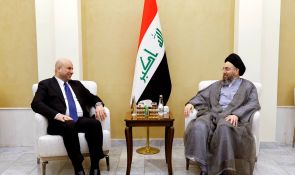
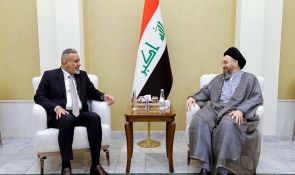
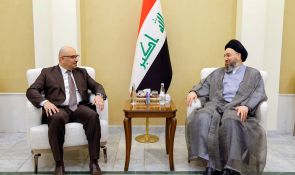
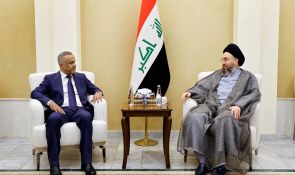
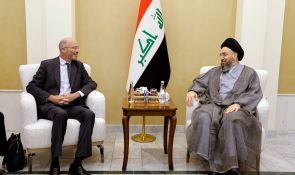
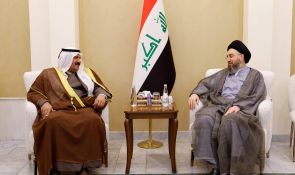
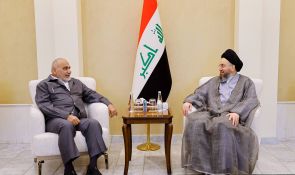
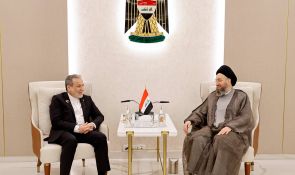
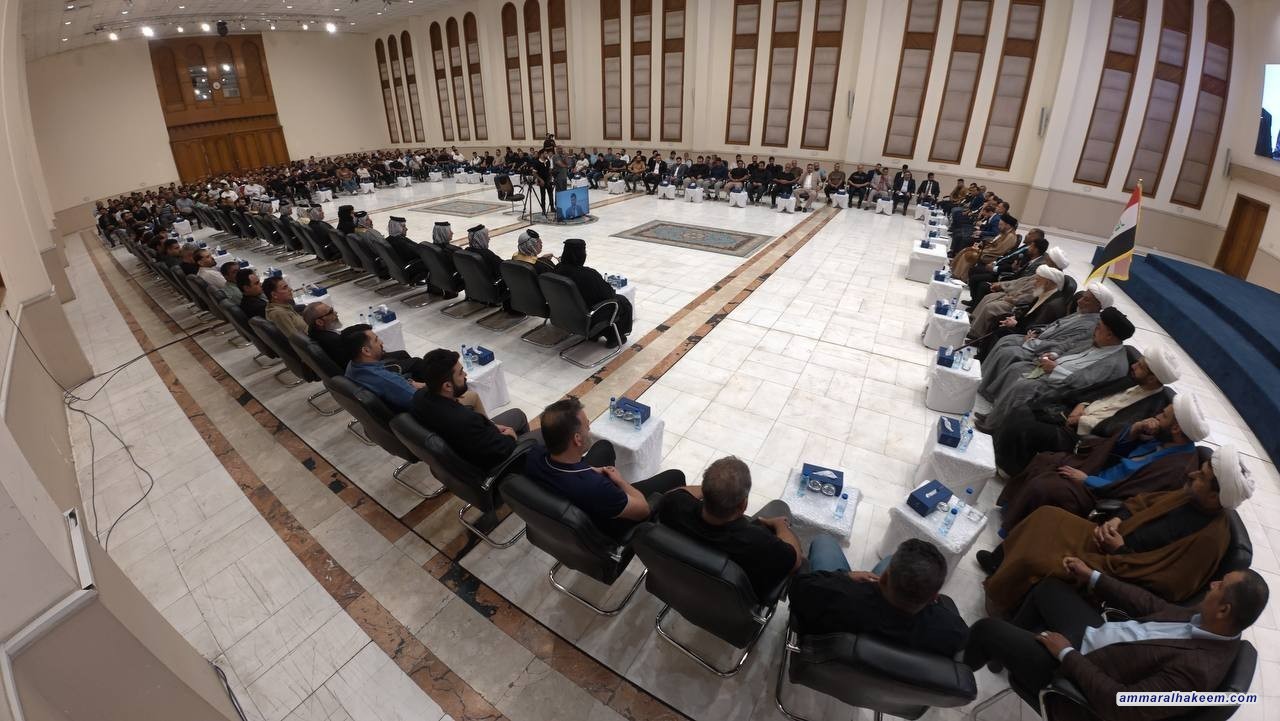
H.E. Sayyid Al-Hakeem, Head of the National State Powers' Alliance and Leader of Al-Hikma National Movement, met with a gathering of organizational leaders in Sadr City, extending his congratulations on the Prophet's noble birth (Mawlid Al-Nabawi) and the blessed birth of Imam Al-Sadiq (PBUH), while also offering his condolences on the anniversary of the martyrdom of Shaheed Al-Mihrab, Grand Ayatollah Sayyid Mohammed Baqir Al-Hakeem (may his secret be sanctified), calling for emulating the conduct of Prophet Mohammed (PBUH), his endurance and patience in bearing the consequences of his Islamic mission, and the harm inflicted upon him and his followers for no reason other than their adherence to Islam.
H.E. explained that Prophet Mohammed (PBUH) was patient, gentle-natured, and warmly welcoming, noting that divine tradition dictates that results come only after diligence and hard work. H.E. further explained that Prophet Mohammed (PBUH) consistently prioritized the public interest over personal interest, emotions, and vendettas, citing the Prophet's approach in dealing with his enemies and howH.E.rose above crises to achieve the higher goal of Islam's universality.
H.E. stressed the importance of steering clear of peripheral conflicts, while emphasizing the need for clarification and rebuttal of doubts and targeting campaigns, calling for perseverance through hardship and enduring difficulties in pursuit of the higher goal of building the state that Iraqis aspire to a state for which they have offered blood, martyrs, and sacrifices.
H.E. affirmed a direct relationship between the scale of targeting and the scale of influence, noting that Al-Hikma National Movement has set an example in field presence and public engagement, in addition to its political role and standing in national decision-making, stressing that this does not sit well with some parties, which drives them to target Al-Hikma National Movement.
H.E. placed on the members of Al-Hikma National Movement the responsibility of defending their project, stressing the need to openly declare their movement identity and take pride in the project, its leaders, and its symbols, considering those who carry the movement's project forward to be closest to the leader of Al-Hikma National Movement.
H.E. called for recognizing the challenges facing Iraq, including the economic crisis resulting from the decline in oil production and exports, expressing his optimism that this crisis would come to an end given the pressure it places on the global economy. H.E. renewed his call for diversifying oil export outlets through a pipeline network toward the Mediterranean and Red Seas, expressing his regret over the absence of such pipelines, which, had they existed, would have enabled Iraq to overcome the crisis and benefit from the rise in prices caused by the ongoing war.
H.E. stressed the importance of diversifying sources of income by activating productive sectors such as agriculture, industry, tourism, investment, and modern technology, along with the importance of increasing oil production in line with Iraq's needs, its strategic reserves, and its population size, calling for the implementation of this through attracting foreign investment from specialized companies and benefiting from the experiences of others. H.E. also stressed the need to empower, train, and develop Iraqi labor, and to preserve its share in projects awarded to foreign companies.
H.E. renewed his call for the consolidation of weapons under state authority through dialogue and mutual understanding, commending the efforts of the armed factions in confronting terrorism and restoring the state, noting that weapons should be handed over to the Popular Mobilization Forces, the official security institution, and stressing the importance of serving the public and maintaining field presence.
H.E. called for providing easy housing loans, and offering alternatives for those in need who have been forced to live in informal settlements.